
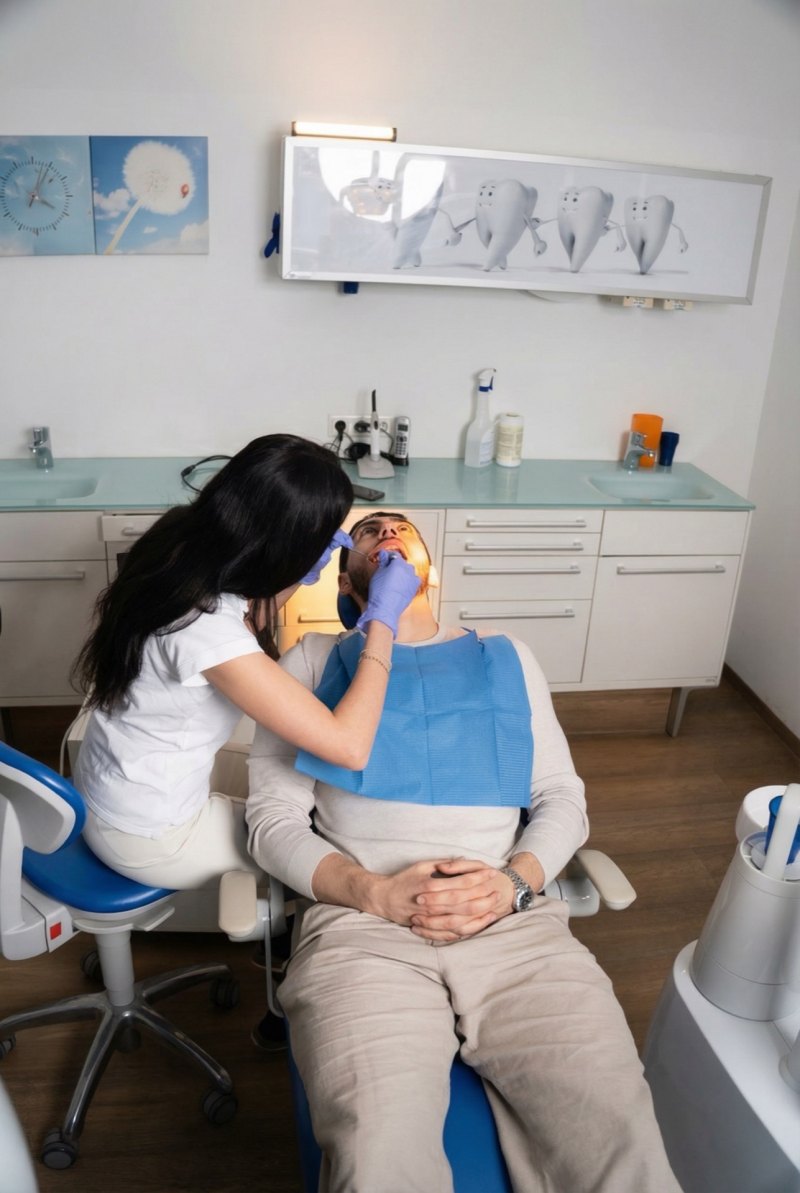
Missing or badly damaged teeth can impair chewing, speech and the stability of your whole set of teeth. Professionally planned dental prosthetics, from fixed restorations such as dental bridges to partial and full dentures, reliably restore these functions and protect against long-term damage to the jaw.
Removable or fixed dental prosthetics
Depending on the initial situation, different forms of fixed prosthetics or removable solutions are used.
Fixed dental prosthetics
Fixed dental prosthetics are restorations that remain permanently in the mouth. In addition to conventional crowns and cast post and cores, these also include modern implants and bridge pontics.
The dental bridge is a well-established form of fixed prosthetics for reliably closing one or more gaps. It is attached to the adjacent teeth, which act as stable pillars and bear the load securely. This fully replaces the function of the missing tooth, so that a removable solution is not necessary and a natural chewing sensation is retained.
Removable dental prosthetics
Partial and full dentures are used when several teeth are missing or a stable bridge is not possible. You can easily take out removable prosthetics yourself for daily cleaning and care.
A partial denture replaces several missing teeth when some of your own teeth remain. It is individually fitted and provides functional stability in everyday life.
A full denture is used when all the teeth in one jaw need to be replaced. It is held in place on the mucous membrane by suction. When fitting it, we pay particular attention to a precise jaw relationship so that the denture sits securely and pressure sores are avoided.
Benefits of high-quality dental prosthetics
Professionally planned dental prosthetics in Vienna at Dr. Hussein's practice offer numerous benefits:
- Restoration of natural chewing function
- Stabilisation of your whole set of teeth
- Avoidance of uneven strain and jaw problems
- Individual adjustment to your bite
- High wearing comfort with fixed prosthetics
- Improved speech by closing gaps that previously affected articulation
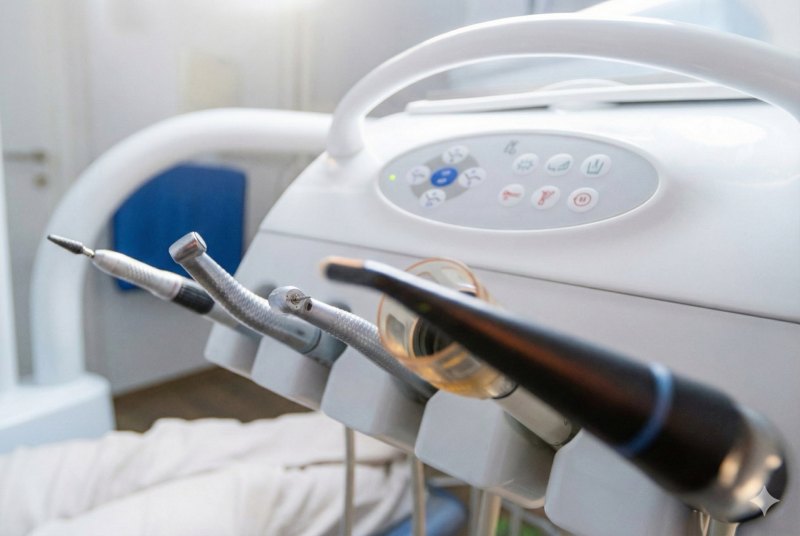
Why medically necessary dental prosthetics are important
If a gap is left untreated, the neighbouring teeth can shift, the bite can change and the entire dental system can gradually become unstable. Such developments are often not immediately noticeable, but in the long term they lead to increased wear or the need for further treatment.
Medically necessary dental prosthetics, such as bridges, crowns or dentures, therefore not only replace a missing tooth but also secure the structure of your whole set of teeth. The aim of treatment is to create stable conditions in order to effectively prevent consequential damage and preserve your dental prosthetics in the long term.
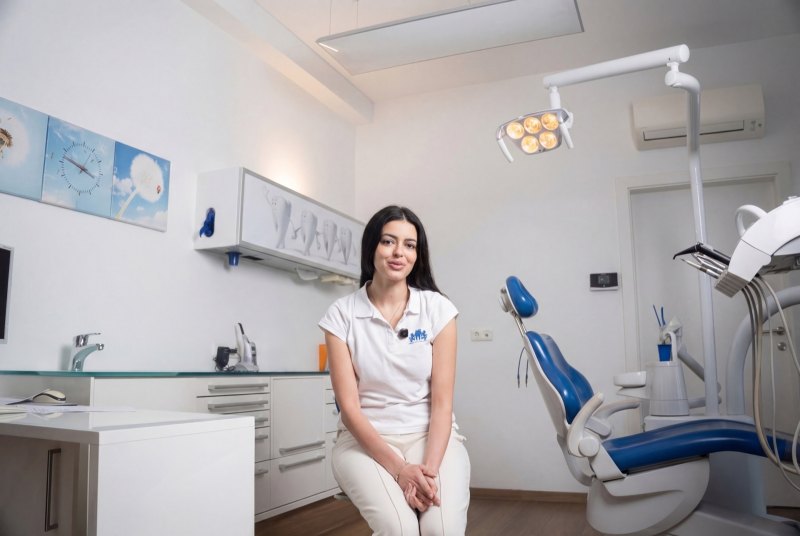
How treatment with dental prosthetics works
Treatment with dental prosthetics takes place in several steps:
- Examination & advice: Comprehensive analysis of your jaw situation and advice
- Preparation: Depending on the type of prosthetics, grinding down the teeth or taking an impression
- Impression: Precision impression for the dental laboratory
- Adjustment: With dentures, there are usually intermediate steps (wax try-in) to set the bite precisely
- Fitting and adjustment: Final fitting or adjustment of your new dental prosthetics
- Check-ups & aftercare: Regular check-ups ensure long-term stability
Duration, durability & costs
Treatment with a dental bridge usually takes two weeks. Dentures (partial or full) take a little longer because of the try-ins. With good care, durability is excellent; regular dental check-ups, such as at our practice in 1050 Vienna, are important here. The cost of dental prosthetics depends heavily on the chosen design and the contributions from your health insurance fund. We will be happy to provide you with a transparent cost estimate.
Who looks after your dental prosthetics?
At Dr. Hussein's dental practice, we work closely with experienced dental technicians to make your dental prosthetics in Vienna individually and with a precise fit. Dr. Muaiad Hussein and Dr. Dalia Milani look after you from the initial planning to the final aftercare.
Advice on dental prosthetics in 1050 Vienna
For any type of dental prosthetics, a personal consultation is essential so that we can assess your individual situation precisely. If you would like information about dental bridges or partial or full dentures, you can come to our practice in 1050 Vienna at any time during our opening hours. We take the time to answer your questions and, together with you, find the right treatment for your dental situation.
Your dentists
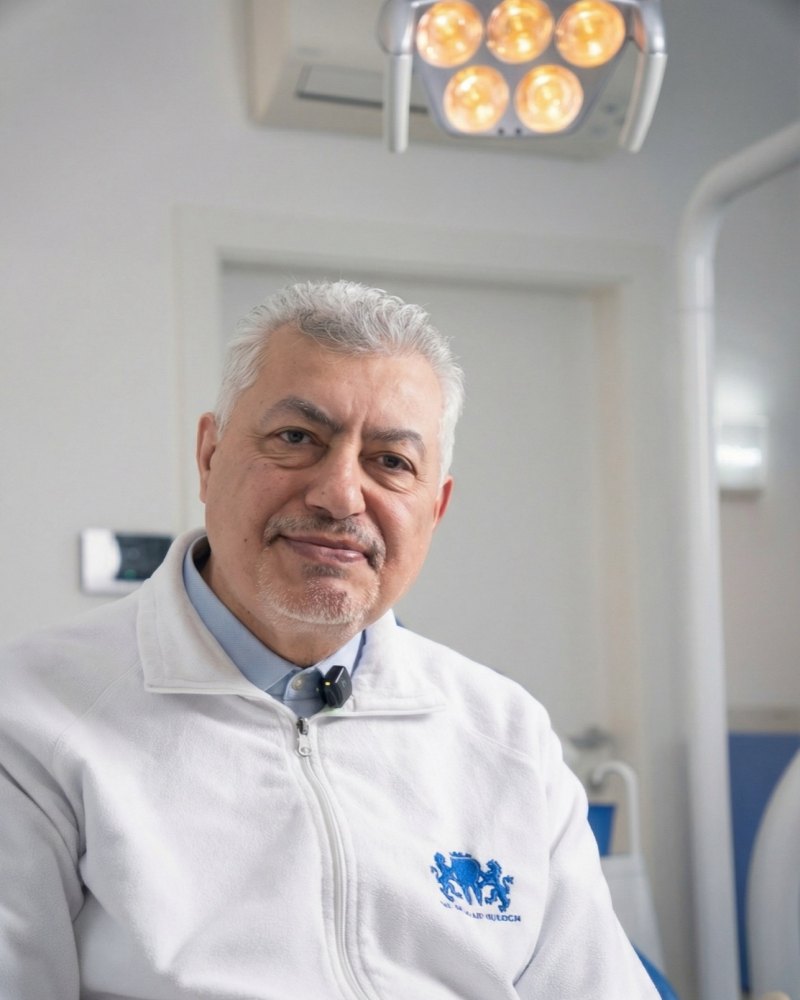
Dr. med. univ. Muaiad Hussein
Specialist in dentistry, oral and maxillofacial medicine (Facharzt für Zahn-, Mund- und Kieferheilkunde), head of the practice
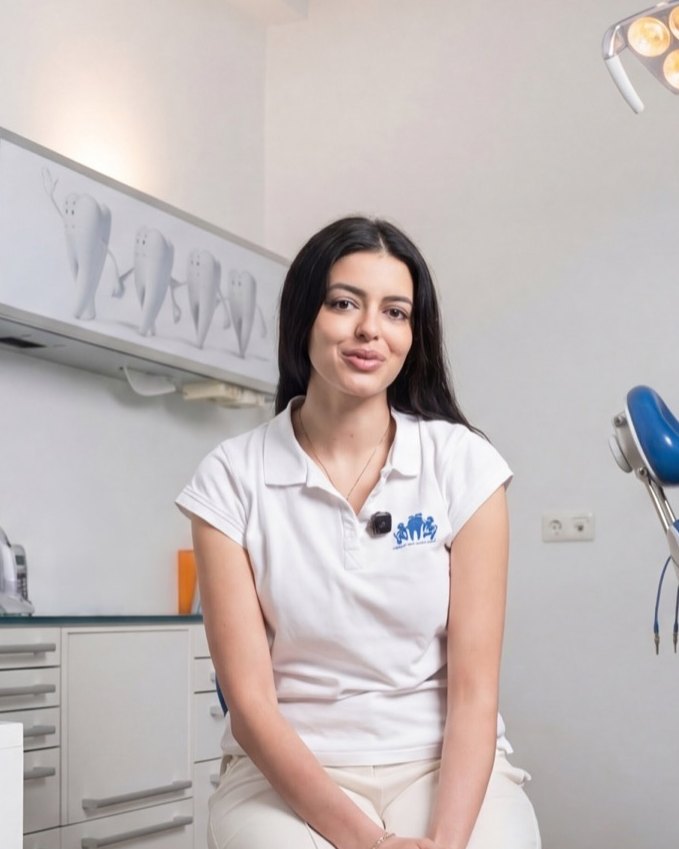
Dr. med. univ. Dalia Milani
Dentist (Zahnärztin)
Frequently asked questions: Dental prosthetics
Which is better: a bridge or an implant?
A dental bridge is often the quicker solution, but it requires the neighbouring teeth to be ground down. An implant replaces the root but leaves the neighbouring teeth untouched. We will advise you individually on both options.
When is a dental bridge advisable?
When one or more teeth are missing and the neighbouring teeth are stable enough to support the bridge.
Can I eat normally with a dental bridge?
Yes. After a short period of getting used to it, you can eat almost anything again with a dental bridge. The bridge reliably restores chewing function and distributes the chewing forces evenly across the supporting teeth.
Does health insurance cover dental prosthetics?
If they are medically necessary, the statutory health insurance funds pay a contribution towards basic treatment.
What is the difference between a partial denture and a full denture?
A partial denture replaces several missing teeth when some of your own teeth remain. A full denture replaces all the teeth in one jaw.
Last updated: 15 October 2026