
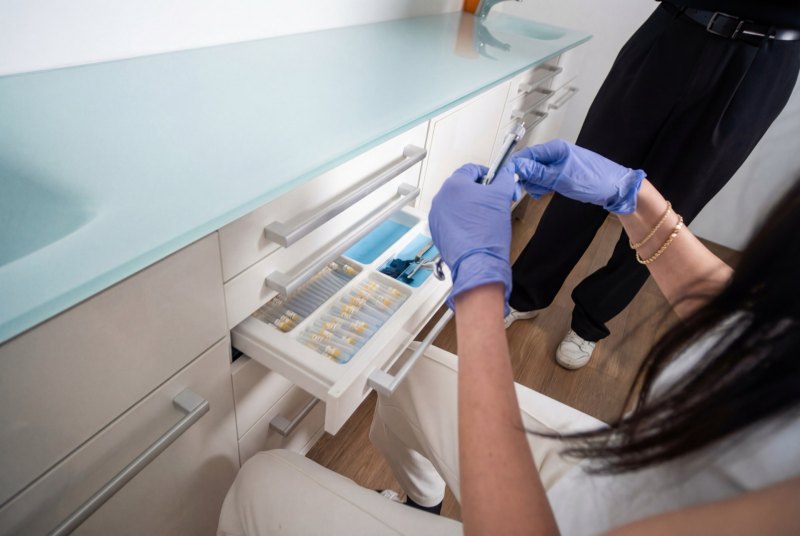
If a tooth has already been so badly damaged by decay, an accident or root canal treatment that neither a conventional filling nor an inlay is sufficient, a high-quality, long-lasting crown is often the right solution. A crown covers the tooth like a protective cap and reliably restores its shape, function and strength. At our practice in 1050 Vienna, we rely on high-quality materials and precise manufacturing for aesthetically pleasing and functional dental prosthetics in Vienna.
Common materials for your dental crown
Various materials are used today when choosing the right restoration. A basic distinction is made between temporary resin crowns, metal-based solutions and modern ceramic crowns:
Metal-ceramic crowns consist of a stable metal framework veneered with a layer of ceramic. This allows a good colour match with the surrounding teeth.
All-ceramic crowns look particularly natural because they reflect light in a similar way to a real tooth. They offer high colour fidelity, durability and good biocompatibility, which is why many health-conscious patients choose them. At our practice, we mainly use this metal-free solution.
Benefits of dental crowns
Dental crowns offer numerous functional and aesthetic benefits:
- Restoration of natural chewing function
- Protection against further damage and tooth fractures, especially for root-canal-treated or severely decayed teeth
- Long-lasting, stable materials
- Natural appearance, especially with all-ceramic crowns
- Individual colour matching to your neighbouring teeth and the option of aesthetic enhancement
- Precise fit for a high level of comfort
Dental crown or implant: what is the difference?
The difference between a dental crown and an implant lies in the initial condition of the tooth. A dental crown is used when the natural tooth root is still intact but the visible part of the tooth has been badly damaged. An implant, on the other hand, replaces a tooth that has been lost completely. It consists of an artificial tooth root anchored in the jaw, a connecting element and the crown attached to it as the visible replacement tooth.
If a dental crown is properly fitted and made from high-quality materials, it can remain stable for many years or even decades. Nevertheless, factors such as heavy mechanical stress or inadequate oral hygiene can cause a crown to become loose over time.
If you notice that a crown has become loose, it is advisable to have it checked promptly at our practice in 1050 Vienna. We will check straight away whether the crown can simply be re-cemented or whether the tooth underneath needs further treatment.
How the treatment works
Getting your new crown involves several precise steps:
- Examination & advice: Analysis of the tooth and choice of the right type of crown
- Preparing the tooth: The tooth is gently ground down to create a stable base
- Impression or 3D scan: Using a precise dental impression or a digital 3D scan, our dental technician makes your individual artificial crown
- Production in the dental laboratory: Our dental technician makes your individual crown with great precision. While it is being made, a temporary restoration protects your prepared tooth.
- Fitting the crown: After a careful check, the finished crown is permanently fixed in place
- Check-ups & aftercare: Regular check-ups ensure long-term stability and function
Duration, durability & costs
Treatment usually takes two to three appointments. After preparation and taking the impression, our dental laboratory needs about one to two weeks to make your all-ceramic crowns precisely. If a crown is properly fitted by the dentist and made from modern materials, it is extremely resilient.
The average lifespan is 10 to 15 years, and often considerably longer with excellent care. A high-quality ceramic crown is also colour-stable and hardly wears, which makes it one of the most durable forms of dental prosthetics.
We think it is important that you know exactly what investment to expect before treatment begins. The cost of a crown can vary from case to case, as it is influenced by several medical and technical factors, such as the choice of material, the manufacturing effort and contributions from your health insurance fund.
Who fits your dental crown?
At our practice in 1050 Vienna, dental crowns are provided by Dr. Muaiad Hussein and Dr. Dalia Milani. Each crown is made individually in close cooperation with an experienced dental technician. This precise coordination between dentist and dental technician ensures an exact fit, functional stability and natural-looking aesthetics.
Advice on dental crowns in Vienna
If you are interested in dental crowns or high-quality dental prosthetics in Vienna, we will be happy to advise you in person at our practice in 1050 Vienna. Drop in during our opening hours and find out about your individual options, with no obligation.
Your dentists
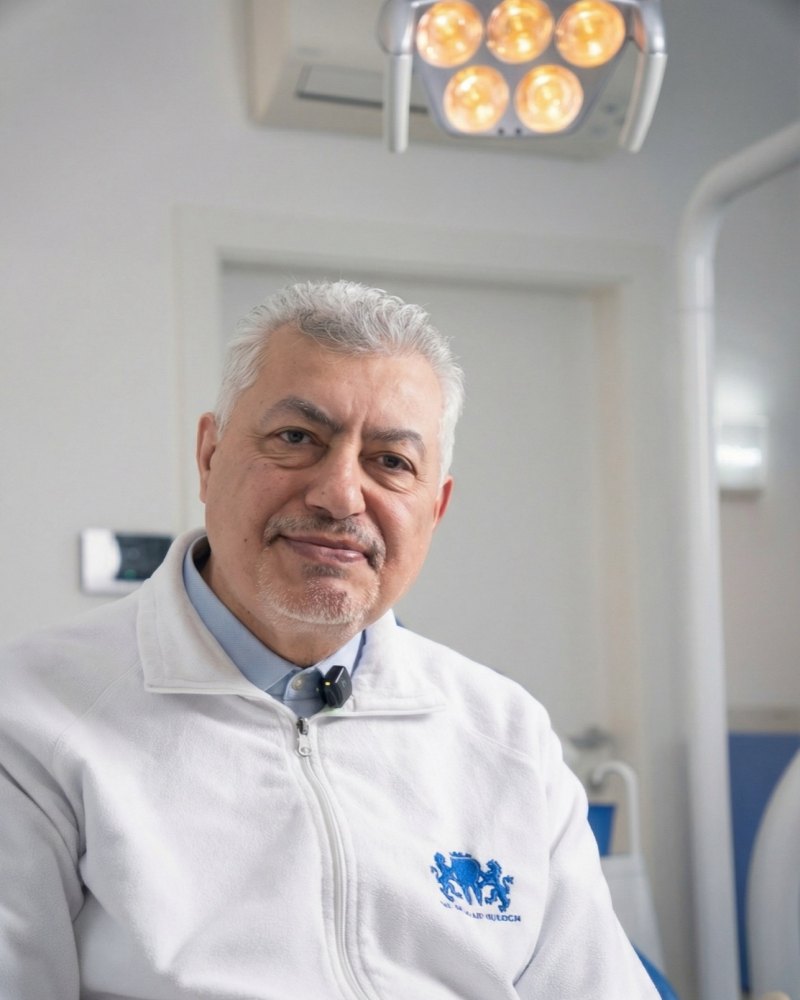
Dr. med. univ. Muaiad Hussein
Specialist in dentistry, oral and maxillofacial medicine (Facharzt für Zahn-, Mund- und Kieferheilkunde), head of the practice

Dr. med. univ. Dalia Milani
Dentist (Zahnärztin)
Frequently asked questions: Dental crowns
How long does it take for a dental crown to be ready?
As a rule, we need two appointments for the whole process. At the first appointment, the tooth is prepared and an impression is taken. After about 10 to 14 days, during which our laboratory makes your individual ceramic crown, the crown is permanently fitted at the second appointment. While you wait, you wear a protective temporary crown.
Are all-ceramic crowns strong enough?
Yes. Modern all-ceramic crowns are resilient and, at the same time, of particularly high aesthetic quality.
Do all-ceramic crowns discolour over time?
No. A key advantage of all-ceramic crowns is their colour stability. Unlike composite or natural tooth enamel, high-quality ceramic does not absorb colour pigments from food and drink (such as coffee, tea or red wine).
Is having a crown fitted painful?
The tooth is prepared under local anaesthetic, so you do not feel any pain during the treatment. After the crown has been fitted, the tooth may be somewhat sensitive to hot and cold for a short time, but this usually settles within a few days.
Is the cost of a dental crown covered by health insurance?
Yes, if a crown is medically necessary, the statutory health insurance funds pay a fixed contribution. This covers basic treatment. If you opt for a high-quality all-ceramic crown, the insurance contribution is offset against the cost, and the difference for the better material and aesthetics remains as your own share. We will be happy to prepare a cost estimate for your insurer.
Last updated: 15 October 2026